Chapter 4
My ultra cycling nutrition strategy on the TBR came down to one rule: never trust the road to feed you.
The last night, somewhere in Montenegro, I stopped at a village store and loaded up on savoury food for the next day. I set it down to lock the bike. When I came back, a dog had eaten everything. I finished the race on sugar only.
That’s the TBR.
The system: two layers
Everything runs on two layers — what you eat while moving, and what you carry as reserve.
The Tailfin top tube bag is the active layer. Naak gels, Naak drink powder, sweet and savoury snacks — everything accessible without stopping. If you have to brake to eat, it’s packed wrong.
The frame bag is the reserve. Same products, deeper stock. You only dig into it when the Tailfin runs dry or when you know a long section with no resupply is coming.
The rule is simple: the Tailfin feeds you. The frame bag saves you.
Resupply: plan or suffer
On the TBR, resupply is not guaranteed. You need a prepared route plan — knowing where the next shop is, what time it opens, and whether you can make it before it closes.
Miss a resupply and you have two options: wait for opening time or ride on empty. Neither is good.
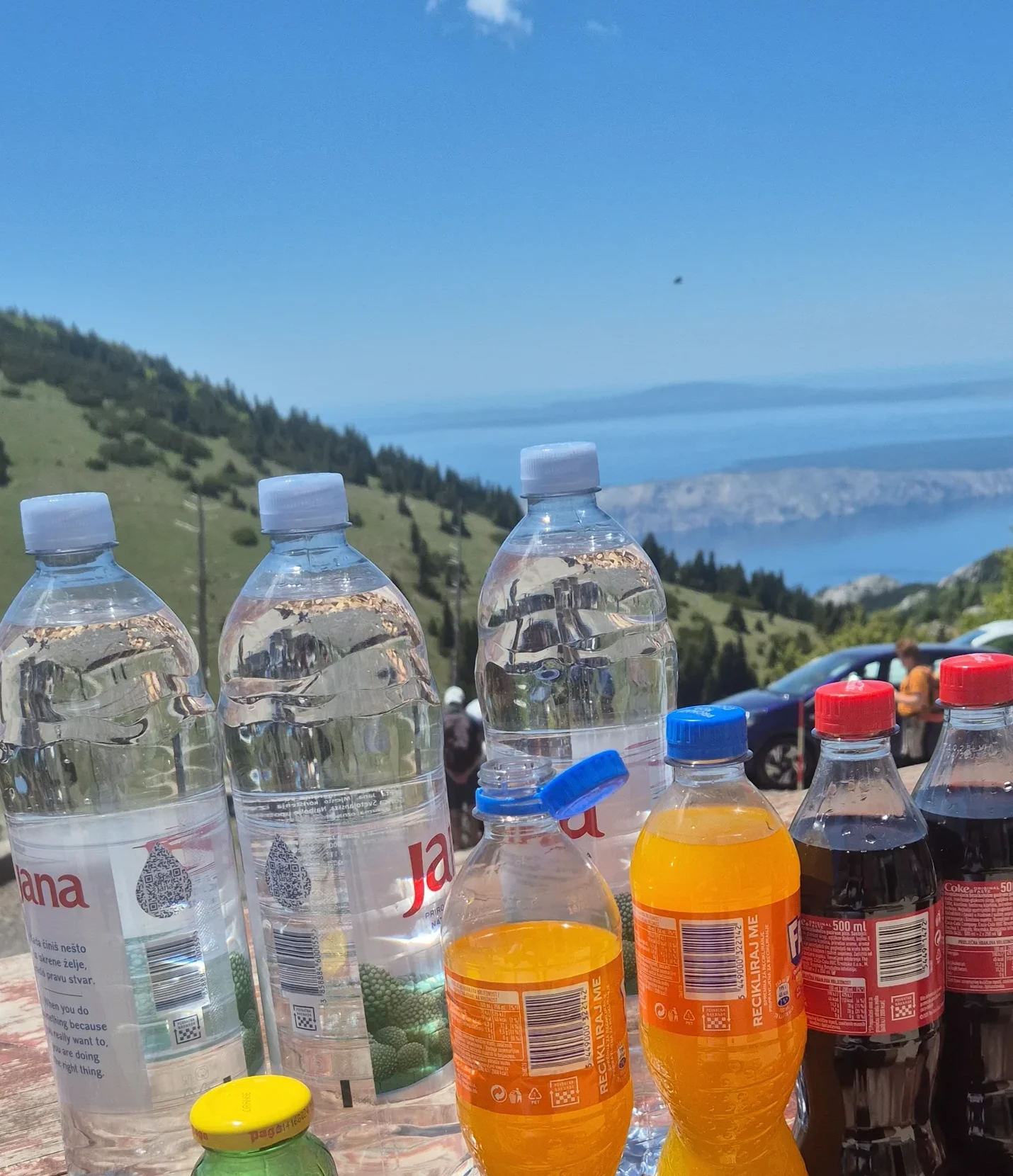
In Bosnia, I had to push hard to reach a village supermarket before it closed. At a refuge in Croatia, there was nothing to eat — just soda and sugar. On the last day, I rode from 5am to 11pm without finding a single resupply point. I ate biscuits and burned through every reserve in the frame bag.
Always have reserve. Always.
What I carried
In the Tailfin — active fuel. Naak gels, Naak drink powder, sweet and savoury snacks. Everything accessible without stopping.
In the frame bag — reserve stocks. Same products, deeper supply. Naak gels, drink powder, chips, biscuits, sweet and savoury backup.
At resupply points — take what works for you. Load up and keep moving.
Water: never run dry
On the TBR, water is as critical as food. The karst terrain absorbs rainfall — surface water is scarce, springs are unpredictable, and resupply points can be very far apart. Running out of water at midday in 40°C heat, in the middle of nowhere, is not an inconvenience. It’s dangerous.
The Camelbak is non-negotiable — but it’s not enough alone. I carried a Salomon flask with a built-in filter. Any stream, any source, any water point on the route becomes usable.
The filter changed everything. On a race this remote, that’s not a luxury — it’s a lifeline.
Electrolyte tabs are also essential. Water alone doesn’t replace what you lose over 7 days of riding in extreme heat. Add electrolytes to every bottle — but test them before the race. Your stomach needs to know them.
The principle
On a 1,400 km self-supported race, hunger is a mechanical problem. You solve it before it becomes an emergency.
The biggest mistake in ultra nutrition is waiting until you’re hungry to eat. By the time you feel the bonk coming, it’s already too late — you’ve lost power and recovery takes time. Eat continuously, before the hunger hits. Small amounts, constantly. Don’t wait for hunger.
Stick to what your stomach knows. A 1,400 km race is not the time to experiment with new food. Unknown products, unfamiliar gels, food your body hasn’t processed before — all of it can trigger stomach issues that cost you hours or end your race. Train with what you race. Race with what you trained.
The frame bag reserve is not optional — it’s the difference between finishing and stopping on a mountain pass at midnight with nothing left.
Plan your resupply. Carry more than you think you need. And keep your savoury food away from Montenegrin dogs.
This is part of The Ultracyclist Files TBR series — written for mid and back of pack riders who want to finish, not just start. Next post: how to deal with the unexpected.
Follow the journey on Instagram → @gravel_bikeandride📸📲